Welcome to August – Women In Translation Month. A movement spearheaded by Meytal Radzinski since 2014, Women In Translation Month (WITM) is a valuable opportunity to show appreciation for literature across the world written by female authors from different linguistic backgrounds.
So why the big fuss? What can reading works in translation written by women provide you?
The literary landscape in the Western world, for an embarrassingly long time, could be summed up by: PMF. That is – Pale, Male, and Frail. Slow changes began to occur by the turn of the 20th century, with British and American (white) female authors beginning to find an accepted place in the literary world. By the 1950s, African-American authors (both male and female) were winning the big name awards in literature, and shortly after there was a rise in the acceptance of literature from Asia and North Africa into the Western Canon. Hand in hand with each other, by the end of the 20th century, we saw “a feminization of the world literary canon, parallel to the inclusion of postcolonial authors” (Sapiro, 2016).
Still, the majority of these books were written in English.
There was little space in the accepted canon for works that had been translated into English, less so for female authors wanting to share their experiences of their lives that differed from the norm of the West.
Then, in the 1970s, as feminism’s Second Wave began to disrupt and confront all aspects of life in Western countries, more women began taking on the role of translator – which led to a notable rise in works by female authors from around the world; a “[collection and distillation of] women’s “voices” in translation from many different countries” (Von Flotow & Farahzad).
But why should I read works in translation? I hear you cry. The answer is a simple one: because your world will be better for doing so.
Reading authors in translation bridges gaps between different linguistic and cultural communities, allowing for the exchange of ideas and stories that are otherwise confined to specific regions or language groups. As Laurent Mauvignier, author of The Birthday Party, said “Translation is a kind of safeguard of the teeming biodiversity of literature” (The Booker Library, 2023). This exchange of stories and language can foster a greater sense of global solidarity and mutual understanding, as readers come to recognize the commonalities that exist across different cultures, as well as the distinct differences that make each culture unique.
What WITM tries to offer is the opportunity for readers to gain insight into the unique challenges and triumphs faced by women globally, understand different cultures and experiences, and challenge stereotypes by providing a more comprehensive view of the world.
One of the major benefits of reading female authors in translation is encountering narratives that are often underrepresented in mainstream literature. By reading about different cultural, societal, and personal backgrounds, your awareness and appreciation for the richness and complexity of the human experience will be forever encouraged.
This August onwards, disrupt traditional literary canons, question all that you have learn about how “good” or “classic” literature has been judged, and curate a more inclusive and representative canon that reflects the diversity of human experience.
Below is a list of 8 books that are all works of translation by female authors, as well as highlighting where the translator/s are women themselves. They all provide a different insight into the lives and experiences of women around the world. From a wide range of non-English speaking authors around the world, these are just a few suggestions on where to begin your exploration of works in translation.
Enjoy!
Please note: descriptions and mini bios are from Goodreads unless otherwise mentioned!
Goodreads Blurb
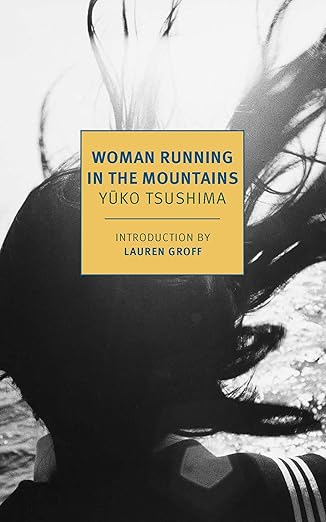
Pregnant and unmarried, Takiko, who lives at home with her violent, alcoholic father and her hard-working mother, discovers the true meaning of love, growing up, and maturity after she bears a son.
About the Author
Yūko Tsushima is the pen name of Satoko Tsushima, a contemporary Japanese fiction writer, essayist and critic. Her early fiction […] was largely based on her experience as a single mother.
About the Translator
Geraldine Harcourt (1952–2019) was a translator of modern Japanese literature. Born in Auckland, New Zealand, Harcourt lived in Japan for much of her life. There, she developed a close working relationship with Yūko Tsushima and translated five works by the author.
Goodreads Blurb
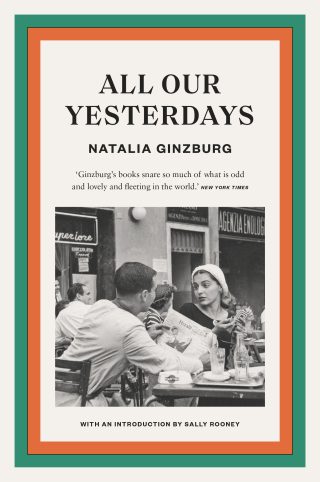
Set against the backdrop of Italy between 1939 to 1944 – the months of anxiety before the country entered the war, through to the tension following the Allied victory – “All Our Yesterdays” follows the lives of two families during the period of great turbulence.
About the Author
Natalia Ginzburg (née Levi) was an Italian author whose work explored family relationships, politics during and after the Fascist years and World War II, and philosophy.

Open Letter Books Blurb
Cars on Fire […] unfolds through a series of female characters […] whose identities are messy and ever-shifting. […] With incredible formal range, from the linear to the more free-wheeling, the real to the fantastical to the dystopic, Rios offers striking, jarring glimpses into life as a woman and an immigrant. Set in New York City, New Jersey, and Chile’s La Zona Central, the stories in Cars on Fire offer powerful remembrances to those lost to violence, and ultimately make the case for the power of art, love, and feminine desire to subvert the oppressive forces―xenophobia, neoliberalism, social hierarchies within the academic world―that shape life in Chile and the United States.
About the Author
Mónica Ramón Ríos was born in Santiago de Chile. […] As a scholar, she has written extensively on Latin American literature and film. Ríos is also one of the creators of Sangría Editora, a publishing collective based in Santiago and New York.
About the Translator
Robin Myers was born in New York and is based in Mexico City. She is the author of several collections of poetry published as bilingual editions in Mexico, Argentina, and Spain.
Open Letter Books Blurb
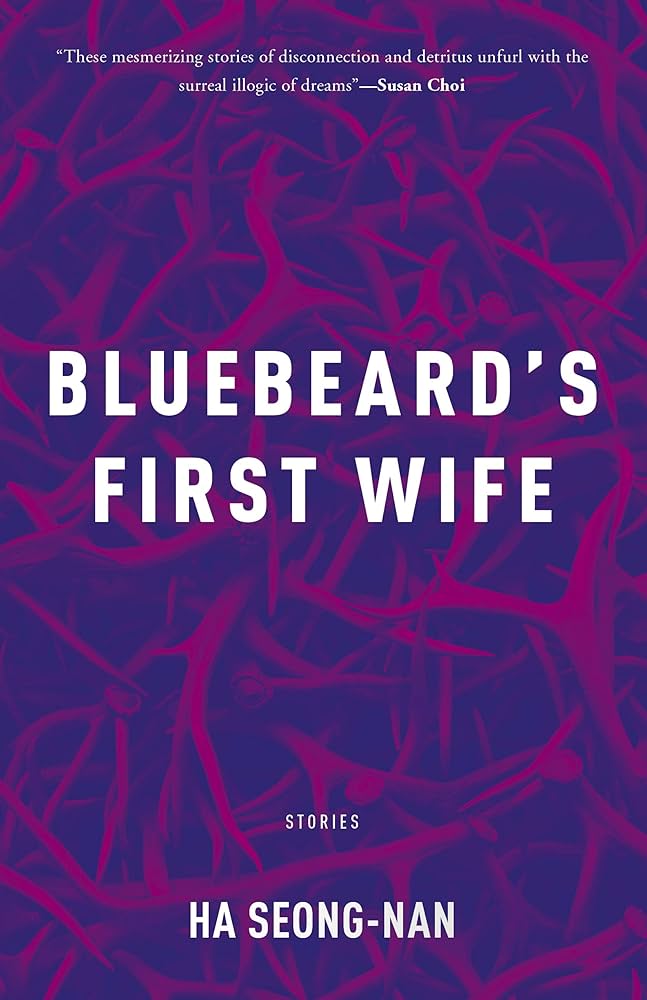
Disasters, accidents, and deaths abound in Bluebeard’s First Wife. A woman spends a night with her fiancé and his friends, and overhears a terrible secret that has bound them together since high school. A man grows increasingly agitated by the apartment noise made by a young family living upstairs and arouses the suspicion of his own wife when the neighbors meet a string of unlucky incidents. A couple moves into a picture-perfect country house, but when their new dog is stolen, they become obsessed with finding the thief, and in the process, neglect their child. Ha’s paranoia-inducing, heart-quickening stories will have you reconsidering your own neighbors.
About the Author
Ha Seong-nan is the author of five short story collections. Over her career, she’s received a number of prestigious awards, such as the Dong-in Literary Award in 1999, Hankook Ilbo Literary Prize in 2000, the Isu Literature Prize in 2004, the Oh Yeong-su Literary Award in 2008, and the Contemporary Literature (Hyundae Munhak) Award in 2009.
About the Translator
Janet Hong is a writer and translator based in Vancouver, Canada.

Goodreads Blurb
Some time in the future, audiences have tired of traditional reality television shows. One channel decides to try something new and ‘Concentration’ — the reality television death camp — is born. Participants for the show are rounded up and loaded onto cattle trucks, among them the beautiful young woman Pannonique. When Pannonique is delivered to the death camp and the cameras are turned on, she unknowingly becomes a media star, but she soon understands that her situation is all too real . . .
About the Author
Amélie Nothomb […] was born in Etterbeek, Belgium [in] 1966, to Belgian diplomats. [She lived] in Japan at the age of two until she was five years old. Subsequently, she lived in China, New York, Bangladesh, Burma, the United Kingdom (Coventry) and Laos. Since [1992], she has published approximately one novel per year, [and] has been awarded numerous prizes [for her work]
Goodreads Blurb
The Enlightenment of the Greengage Tree is an extraordinarily powerful and evocative literary novel set in Iran in the period immediately after the Islamic Revolution in 1979. Using the lyrical magic realism style of classical Persian storytelling, Azar draws the reader deep into the heart of a family caught in the maelstrom of post-revolutionary chaos and brutality that sweeps across an ancient land and its people.
About the Author
Shokoofeh Azar moved to Australia as a political refugee in 2011. She is the author of essays, articles, and children’s books. The Enlightenment of the Greengage Tree, originally written in Farsi, was shortlisted for the Stella Prize for Fiction in Australia and is her first novel to be translated into English.

Goodreads Blurb
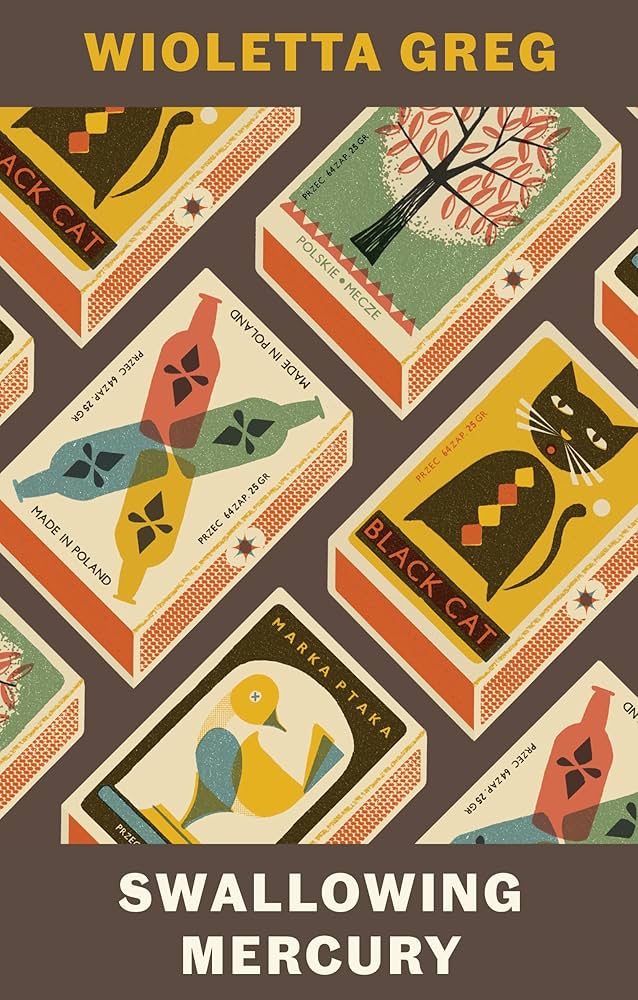
Swallowing Mercury is about the ordinary passing of years filled with extraordinary days. In vivid prose filled with texture, colour and sound, it describes the adult world encroaching on the child’s. From childhood to adolescence, Wiola dances to the strange music of her own imagination.
About the Author
Wioletta Grzegorzewska, Wioletta Greg (9 February 1974) is a Polish poet and writer. [She] spent ten years in Czestochowa where she organised cultural events, edited student journals, wrote articles about local literary developments. Between 1998 – 2012 she published six poetry volumes […] in which she covers her childhood and the experience of growing up in Communist Poland.
About the Translator
Eliza Marciniak is an editor and translator born in Poland in 1974. Her recent projects include Swallowing Mercury, by Wioletta Greg, translated from Polish.
Goodreads Blurb
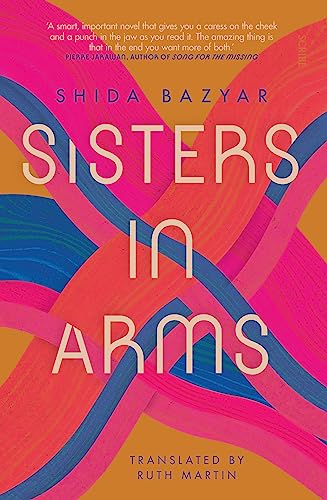
‘We don’t exist in this world. Here, we are neither Germans nor refugees, we don’t report the news and we aren’t the experts. We’re some sort of wildcard.’ Sisters in Arms is a provocative, uncompromising, and moving novel about the extraordinary alliance between three young women and the only thing that makes a self-determined life possible in a society that doesn’t tolerate otherness: unconditional friendship.
About the Author
Shida Bazyar’s debut novel Nachts ist es leise in Teheran has won several awards and been translated into Dutch, Farsi, French and Turkish. Her second novel, Sisters in Arms, won the Ernst Toller Award and was nominated for the German Book Prize.
About the Translator
Ruth Martin is a translator [of] German. […] She has taught translation at the University of Kent and the Bristol Translates summer school, and is a former co-chair of the Translators Association.
Thank you for reading!
Sources:
▸ Sapiro, Gisele (2016) ‘How Do Literary Works Cross Borders (or Not)? A Sociological Approach to World Literature.’ Journal of World Literature, 1(1): 81-96.
▸ The Booker Library (2023) Why we should celebrate translated fiction, according to our longlistees, The Booker Library. Available at: https://thebookerprizes.com/the-booker-library/features/why-we-should-celebrate-translated-fiction-according-to-our-longlistees (Accessed: 15 August 2024).
▸ Von Flotow, L. and Farahzad, F. eds., 2016. Translating women: Different voices and new horizons. Taylor & Francis.

 flights & fiction . . .